
Sea Turtle Basics
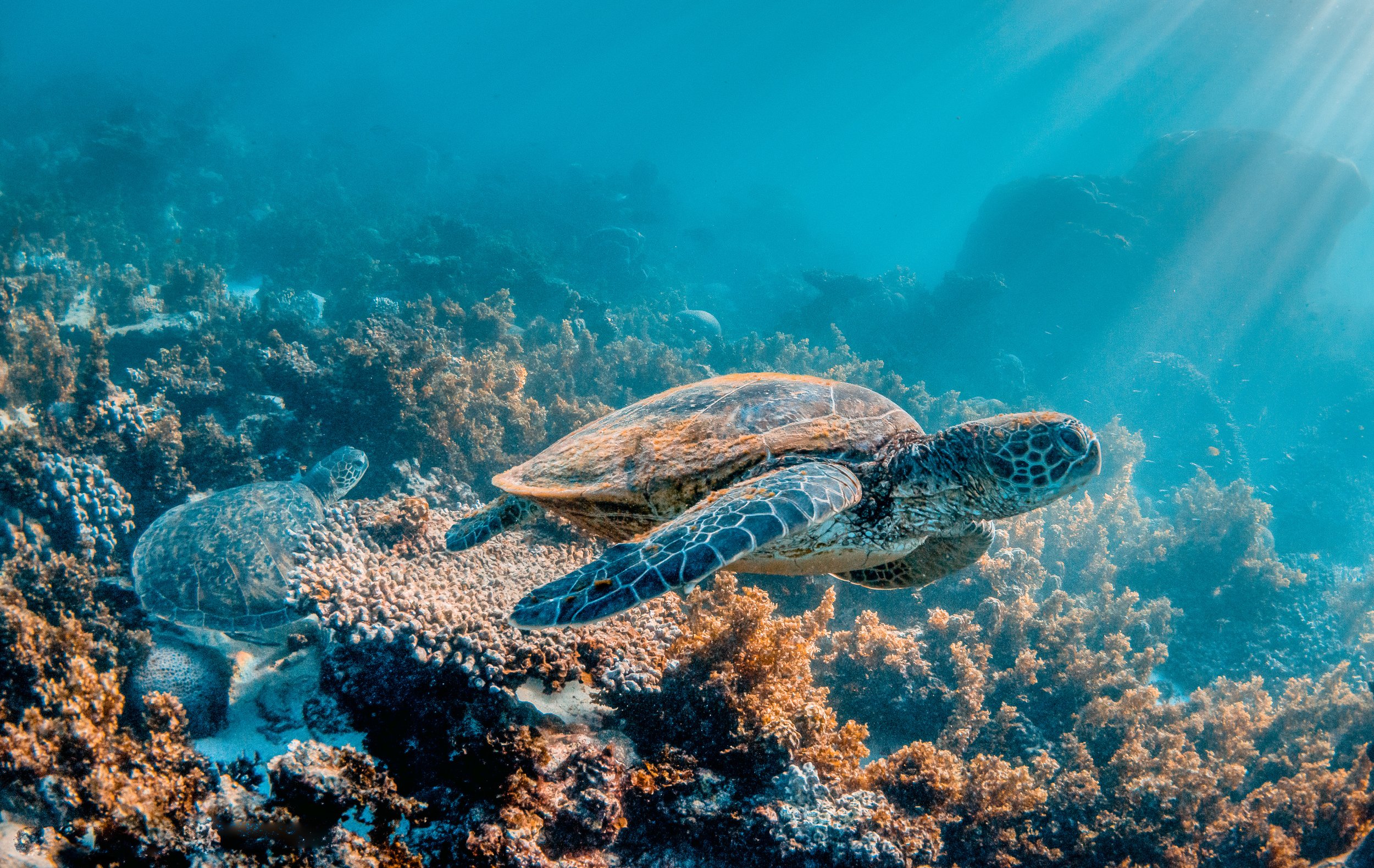
Sea turtles are marine reptiles found in oceans worldwide, known for their fascinating behaviors and significant ecological roles.
These gentle giants help maintain seagrass beds, coral reefs, and marine food chains which are essential to ocean health.
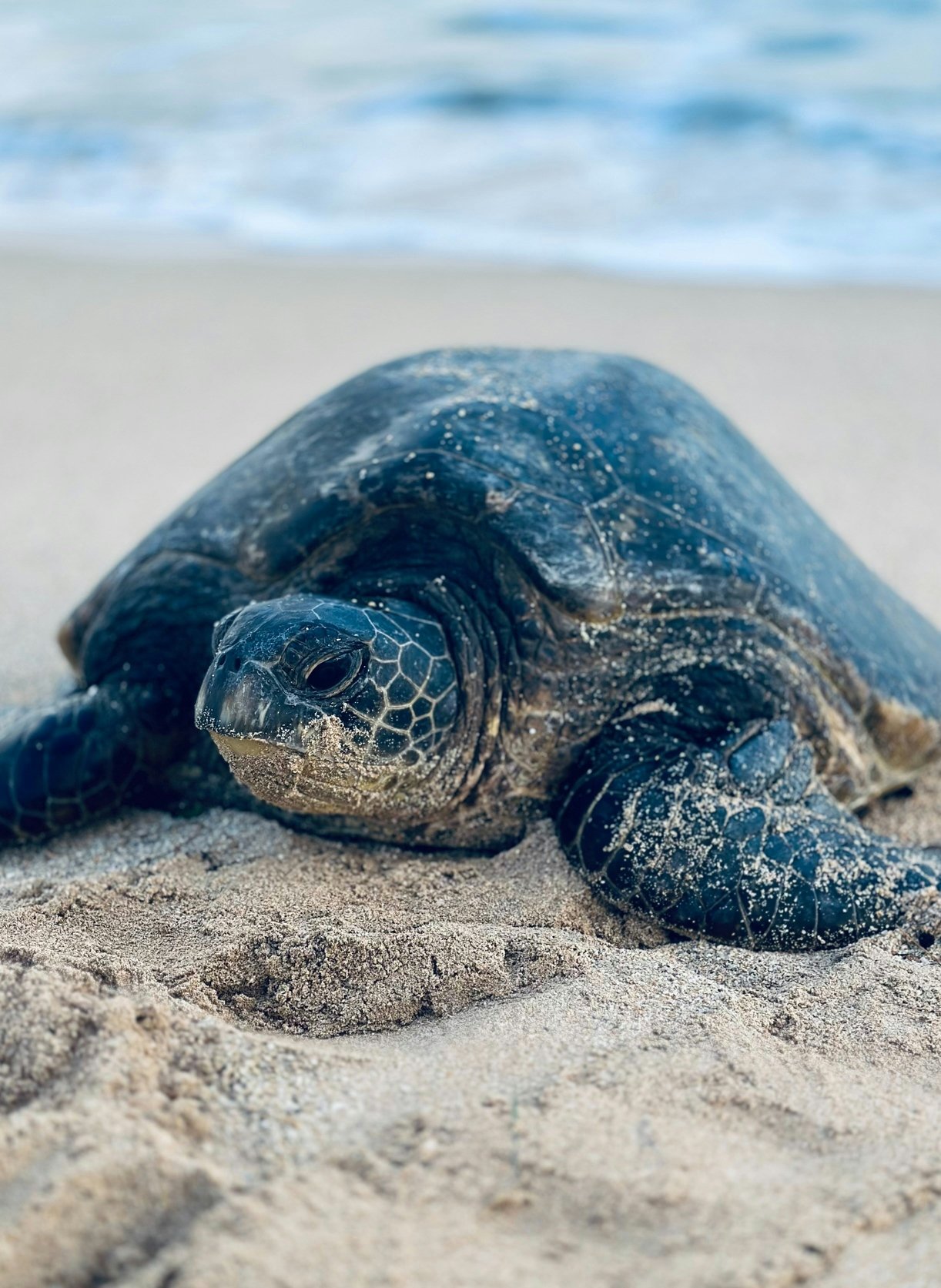
There are 7 species of sea turtles found world-wide. Four of these species have been found on the beaches of Northern Outer Banks of North Carolina.
Sea turtles of the Outer Banks
-

Loggerheads are the most common, followed by green, an occasional Kemp’s Ridley and a rare leatherback.
-
Sea turtles are reptiles – they breathe air, are cold blooded, and lay eggs. They breathe air but spend most of their lives in the water.
-
Sea turtles are deep divers and can stay underwater for hours at a time. They even sleep underwater!
-
Sea turtles have flippers, not feet
-
If healthy, they only come ashore to nest (except for Pacific greens who leave the ocean to sun-bathe)
-
Sea turtles are capable of crossing entire oceans, and they navigate using the Earth’s magnetic field. Leatherbacks can migrate over 12,000 miles annually between feeding grounds and nesting beaches.
-
Sea turtles face natural and human action threats at different stages of their lives.
-
Sea turtles have long lifespans, but their growth to adulthood is slow, with many species taking decades to reach adulthood.

Explore our research
Learn how researchers measure nest temperatures and study their effects on developing sea turtle embryos.
DNA studies
Explore how genetic analysis helps identify turtle populations, nesting origins, family relationships, and migration patterns.
Nest temperatures
Learn how researchers measure nest temperatures and study their effects on developing sea turtle embryos.
Incubation times
Examine the environmental conditions that influence how long sea turtle eggs take to hatch.
Hatching success
See how scientists evaluate nest outcomes and identify the factors that affect egg and hatchling survival.
Temperature dependent sex determination
Understand how incubation temperature influences the sex of developing sea turtles—and what a warming climate may mean for future populations.
Nest emergence prediction
Explore the methods used to estimate when hatchlings will leave the nest and begin their journey to the ocean.
Monitoring nest activity with hydrophones
Discover how underwater acoustic sensors can detect movement inside a nest and improve predictions of hatchling emergence.

FAQs
-
Protecting turtle nests is crucial to ensuring the survival of sea turtles. Here are some ways you can help:
Respect nesting areas: Avoid disturbing marked turtle nesting sites on beaches.
Minimize artificial light: Bright lights can confuse hatchlings, leading them away from the ocean.
Keep beaches clean: Remove trash and debris, which can obstruct hatchlings’ journey to the water.
Report nests: Notify local wildlife organizations if you spot a turtle nest in an unprotected area.
Taking these steps not only safeguards turtle nests but also helps local conservation efforts thrive.
-
Sea turtles have varied diets depending on their species:
Green turtles: Primarily eat seagrasses and algae.
Leatherback turtles: Specialize in eating jellyfish.
Loggerheads: Consume crabs, clams, and other shelled creatures.
Hawksbills: Feed on sponges and other invertebrates found in coral reefs.
Kemp’s ridleys and olive ridleys: Enjoy a mix of crabs, shrimp, and other small marine creatures.
This diversity in diet highlights their critical role in maintaining healthy marine ecosystems.
-
Determining a sea turtle’s age can be challenging, but researchers use these methods:
Size and shell growth: Younger turtles grow rapidly, so their size can be a good indicator of age in the first few years.
Growth rings: Like trees, sea turtles develop growth rings on their shells and bones, which can be studied to estimate age.
Tagging and tracking: Sea turtles marked as hatchlings provide exact age data when recaptured later in life.
While these methods offer estimates, they are not always precise due to environmental and individual factors influencing growth.
-
Sea turtles typically live 50 to 70 years in the wild, though some species, like green and leatherback turtles, may live longer. Factors such as diet, predation, and environmental conditions play a significant role in their longevity. Conservation efforts to reduce threats like plastic pollution and habitat loss are essential for helping these creatures live full lives.
-
Sea turtle eggs generally take 45 to 70 days to hatch, depending on species and environmental factors like temperature. Warmer sands often speed up incubation but may result in more female hatchlings, while cooler sands produce more males. Protecting nests during this critical period ensures more hatchlings make it to the ocean.