
Monitoring Nest Activity With Hydrophones
Embryos/hatchlings make noise as they hatch and make their way to the surface of the sand. By identifying and classifying these sounds, volunteers can better determine when hatchlings are ready to emerge.
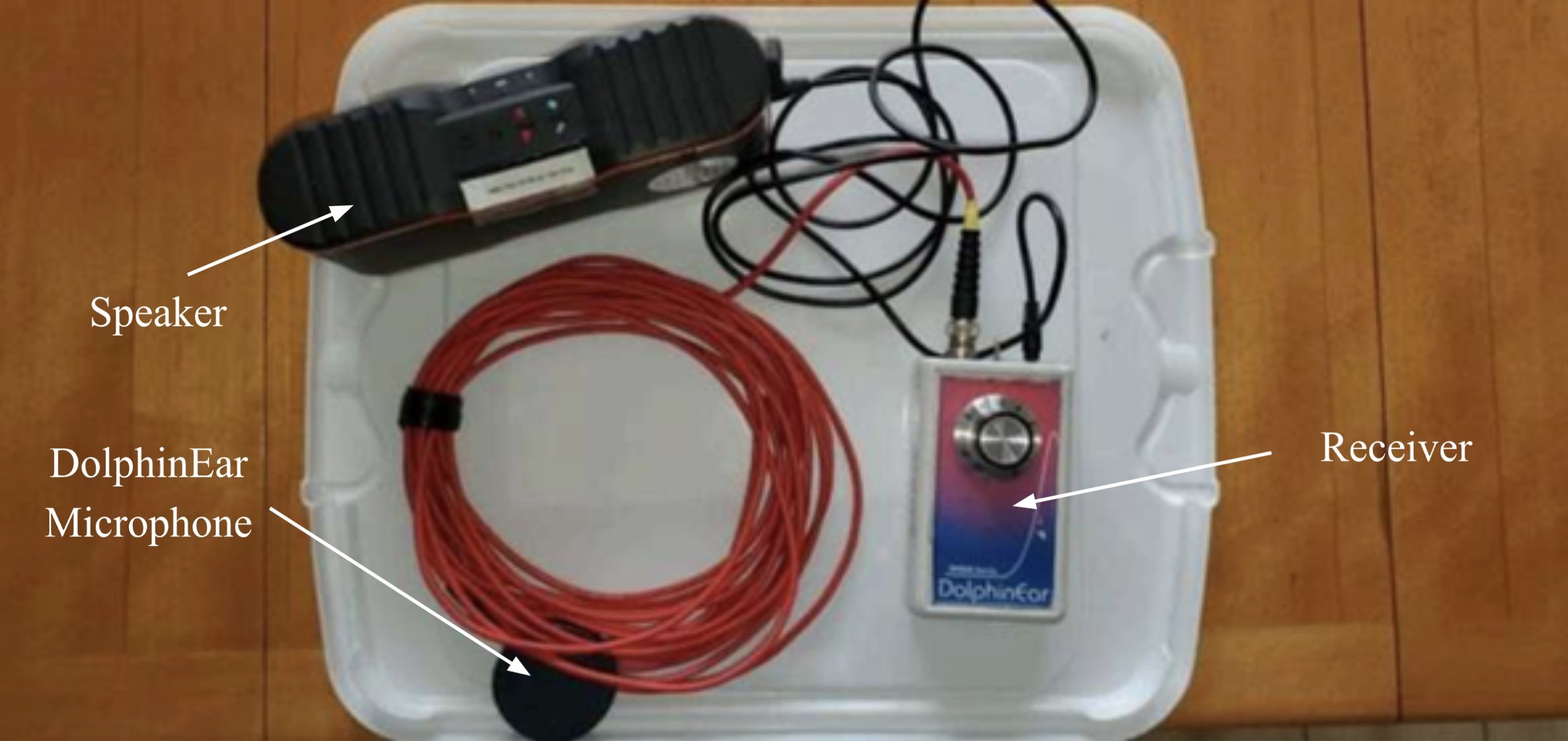
N.E.S.T. initially used stethoscopes to listen to nests and then later used sophisticated hydrophones called DolphinEars like the one shown in this photo.
The types of sounds give volunteers clues about the nest’s stage of development.
Vocalizations, for example, can be heard at any stage but most frequently by embryos, i.e. in the shell. Tapping sounds come from embryos trying to pip out of the shell. Falling sand or “gentle waterfalls or rustling” sounds are made by hatchlings as they leave the confines of their shells and make their way through the sand to the surface. As more and more hatchlings are involved, the waterfalls become louder or even roaring later in the process.
Not all sounds heard at the nest are made by sea turtles. Sounds coming from the ocean, human activities or other wildlife on the beach can easily be confused for turtle sounds. Careful listening and observation of beach activities can usually determine the source.
